

TU Delft Minor Biomedical Engineering · 2025

EduPace

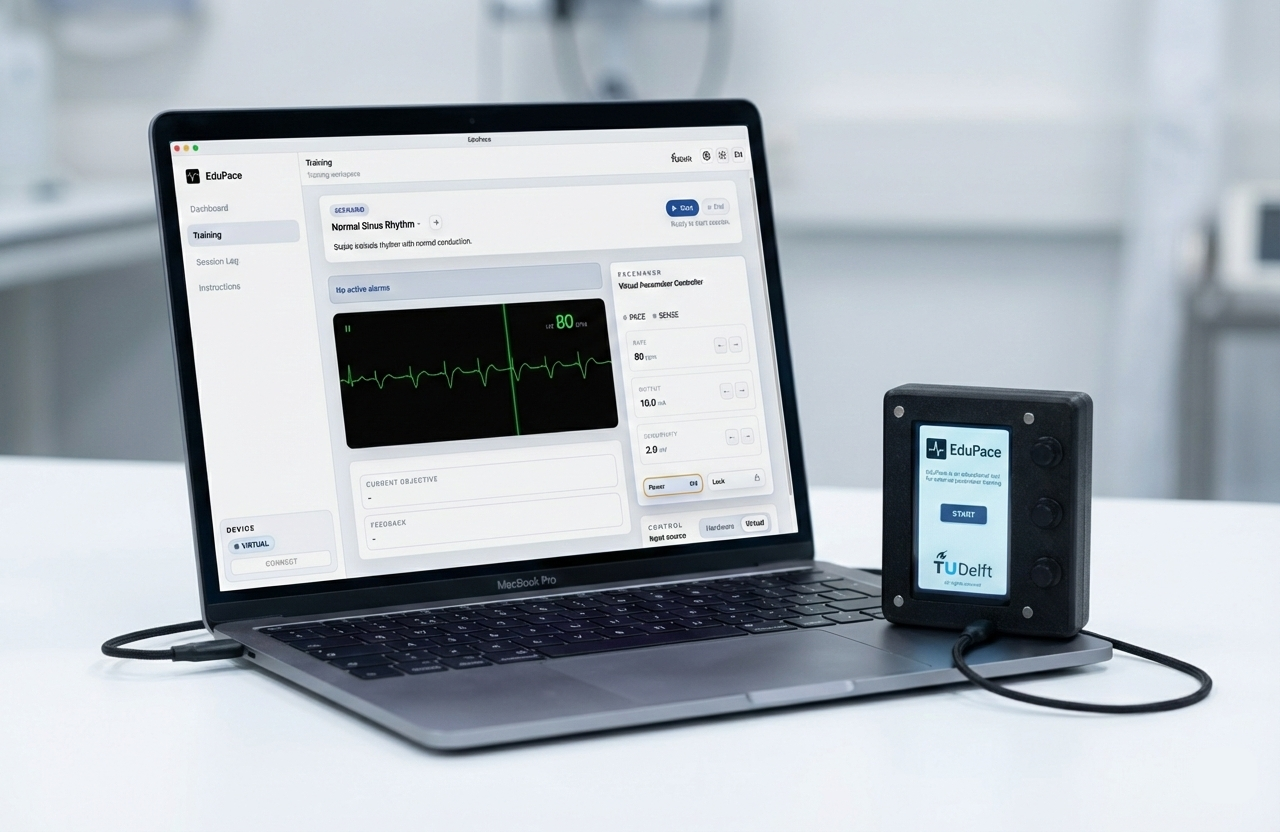
EduPace is a hands-on training simulator that enables medical staff to safely practice single-chamber temporary external ventricular pacing. The system combines a physical device with a computer application with a real time ECG simulation. Users can adjust pacing, sensing, and output parameters on the device while immediately observing the ECG response.

EduPace pacemaker training device
Collaborating institutions
TU Delft logo Reinier de Graaf Hospital logo

Project overview

EduPace was developed as part of the TU Delft Minor Biomedical Engineering in response to a clinical training gap identified at Reinier de Graaf Hospital. Nurses reported limited confidence in configuring temporary external pacemakers due to infrequent use in daily clinical practice.

The system recreates the appearance, controls, and functional behaviour of the Medtronic 53401 Temporary External Pacemaker used at the hospital. Training focuses on ventricular pacing for atrioventricular conduction disorders, ECG interpretation, and patient responses to pacing parameter adjustments. Learners can rehearse device setup, pacing decisions, and troubleshooting in a safe environment before encountering real emergency situations.

Temporary external pacemakers are used to stabilise patients with bradycardia caused by sinoatrial node dysfunction or atrioventricular (AV) blocks. Because these devices are used infrequently on the ward, many nurses lack opportunities to practise the setup and adjustments required for rapid intervention. EduPace addresses this gap by providing a realistic, repeatable learning environment that mirrors real-world pacing workflows.

Key training objectives

  • Focuses on ventricular pacing to manage AV conduction failures.
  • Reinforces recognition of ECG changes across AV block severity.
  • Simulates capture thresholds and sensing behavior.
Problem statement

Confidence gap

Temporary external pacemakers are rarely used at the Reinier de Graaf hospital’s CCU, which limits nurses’ opportunities to maintain proficiency and confidence, and existing solutions such as Medtronic’s VirtualEPG do not offer hands-on device practice.

Project goal

Practical, repeatable practice

The goal of this project is to develop an educational, hands-on training simulator that enables nurses to gain practical experience and confidence in using a single-chamber temporary pacemaker for ventricular pacing.

Development of EduPace

EduPace was developed through a staged, system-level process spanning software architecture, electronic hardware, and physical device design. Each component was developed iteratively and in parallel, with design decisions informed by clinical requirements and user feedback, ultimately converging into a clinical training simulator.

Software

ECG modeling and rendering

The ECG engine responds to adjustable parameters (rate, output, and sensitivity) and supports four training rhythms: Normal sinus rhythm, 1st degree AV block, 2nd degree AV block (Mobitz II), and 3rd degree AV block (complete).

Rational Bezier-Bernstein Model

EduPace models each ECG trace with a Rational Bezier-Bernstein formulation that weights control points to shape physiologic peaks and valleys while maintaining a smooth, continuous curve across pacing cycles.

$$\mathbf{R}(t)=\frac{\sum_{i=0}^{n} w_i\,\mathbf{p}_i\,B_i^n(t)}{\sum_{i=0}^{n} w_i\,B_i^n(t)},\quad B_i^n(t)=\binom{n}{i}t^i(1-t)^{n-i}$$


Control points were extracted from representative ECG traces using manual sampling to improve physiological realism. This approach was inspired by Chutchavong et al. and chosen for its balance between visual accuracy and computational efficiency.

ECG library

From ECG trace to bedside monitor

Clinical ECG morphologies were digitised and reconstructed in Python using a Rational Bézier–Bernstein model, then rendered in JavaScript to drive the real-time simulator display.
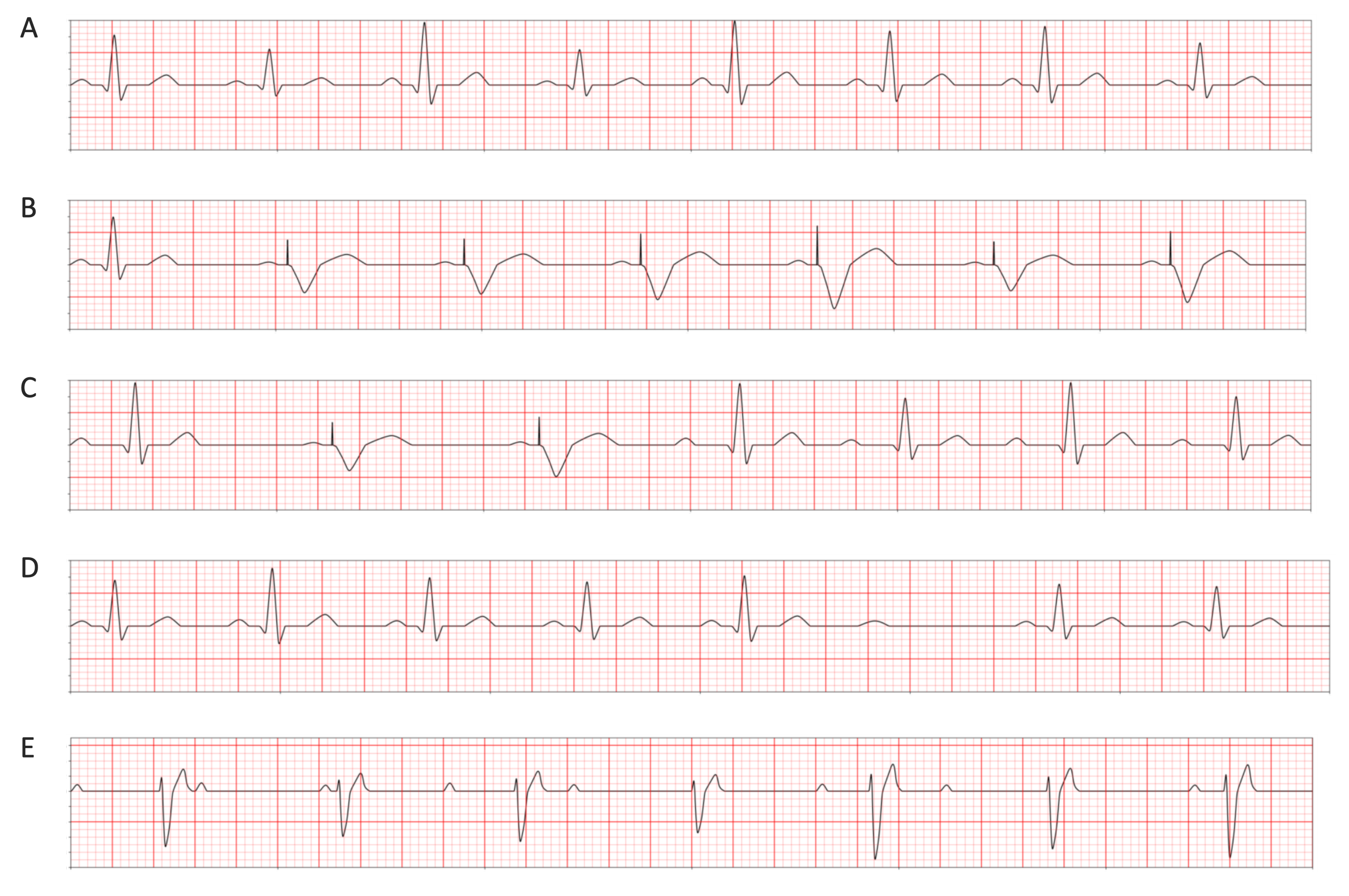
ECG traces for EduPace pathologies and pacing responses
Reference morphologies used in the pacing engine.
  • A. Normal sinus rhythm (intrinsic HR: 80 bpm).
  • B. Ventricular pacing example: intrinsic HR 40 bpm, pacer rate 70 ppm, sensitivity 0.5 mV, output 1.7 mA.
  • C. 1st degree AV block: intrinsic HR 75 bpm, pacer rate 60 ppm, sensitivity 0.7 mV, output 1.7 mA.
  • D. 2nd degree AV block (Mobitz II): intrinsic HR 80 bpm, pacer rate 90 ppm, sensitivity 0.5 mV, output 1.3 mA. No capture at this output (below capture threshold).
  • E. 3rd degree AV block (complete): intrinsic HR 70 bpm, pacer rate 80 ppm, sensitivity 0.4 mV, output 1.3 mA. No capture at this output (below capture threshold).

Try the pacing controls

Adjust rate, output, and sensitivity to see sensing and capture behaviour on the ECG.

Simulated patient HR: 40 bpm
Rate
80 bpm
Output
6 mA
Sensitivity
5 mV

EduPace App

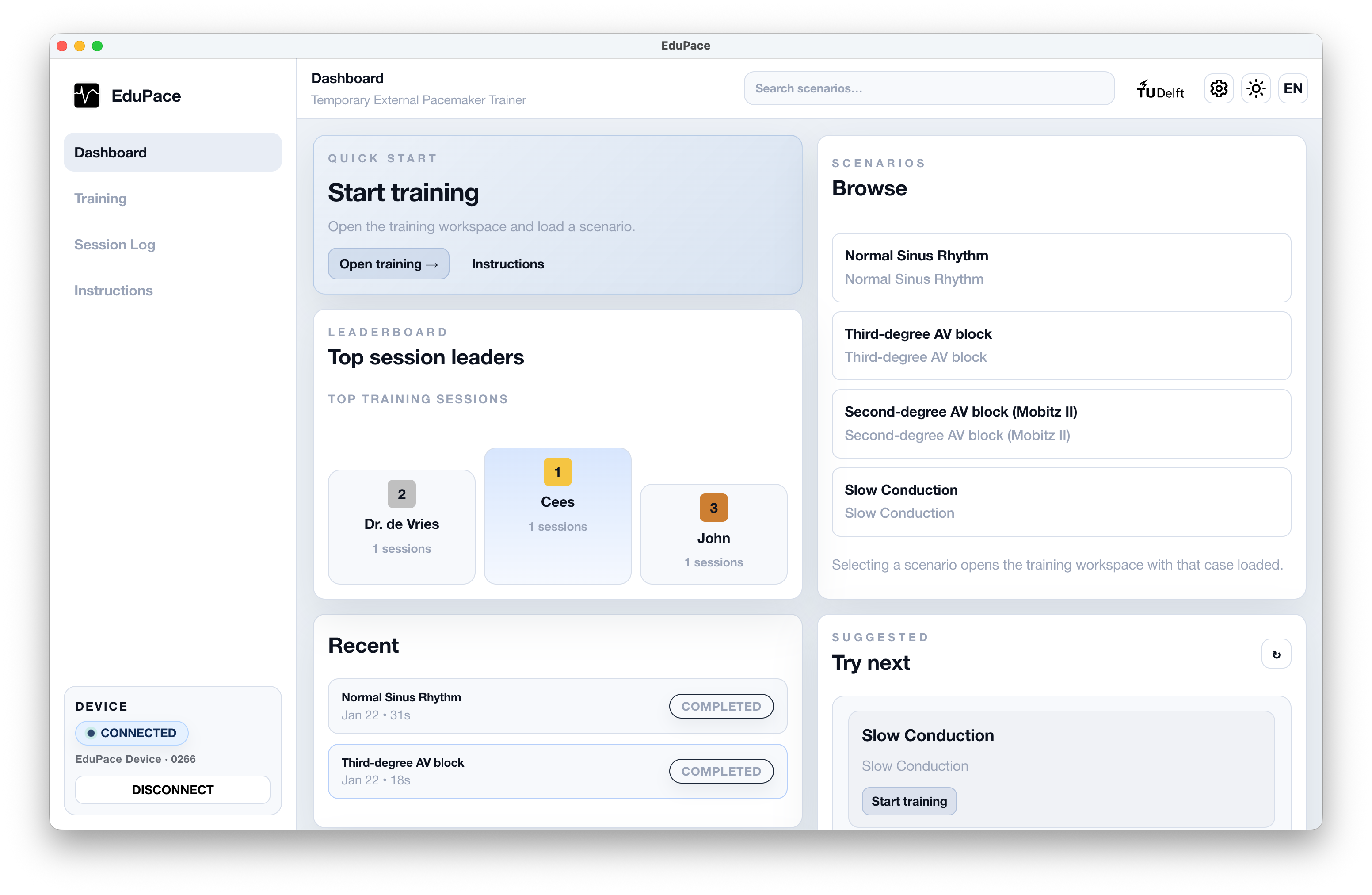
The simulator was built as a responsive web app, packaged into an Electron desktop application, and distributed through GitHub releases for offline lab setups.

Dashboard

Browse training cases, see recent sessions, and quickly start a guided scenario.

Live training workspace

Practice pacing and sensing with a real-time ECG display and responsive controls.

Virtual pacemaker controls

Train without hardware using an on-screen pacemaker that behaves like the physical device.

Plug-and-play hardware connection

Connect the EduPace device over USB and start training right away, with the simulator controlled from the physical interface.

Session review and learning feedback

After each run, review what happened and see whether the patient was stabilised and how long it took.

Modular design

Modular design separates ECG waveform generation, scenario logic, and device communication, making it easy to add new scenarios or pacing modes later.
Hardware

EduPace Device

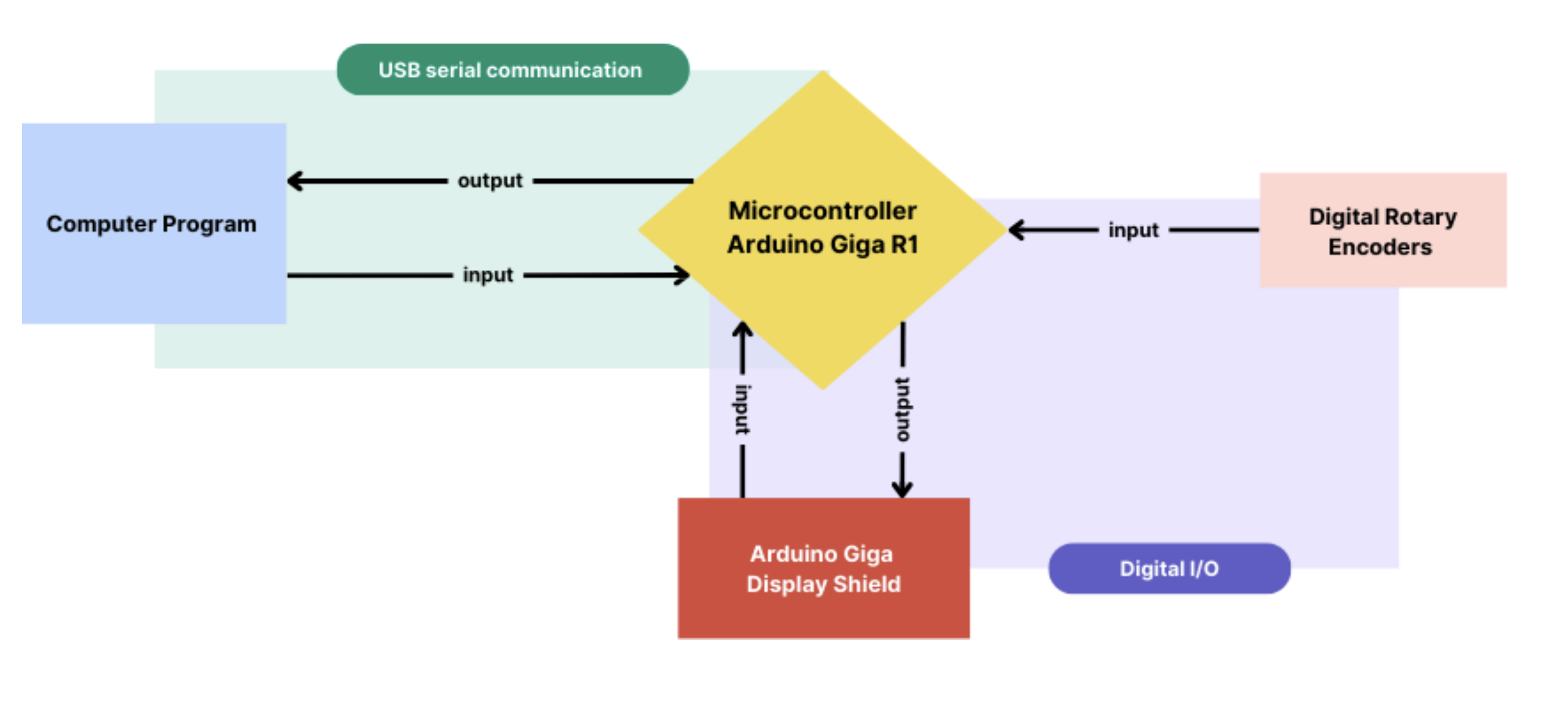
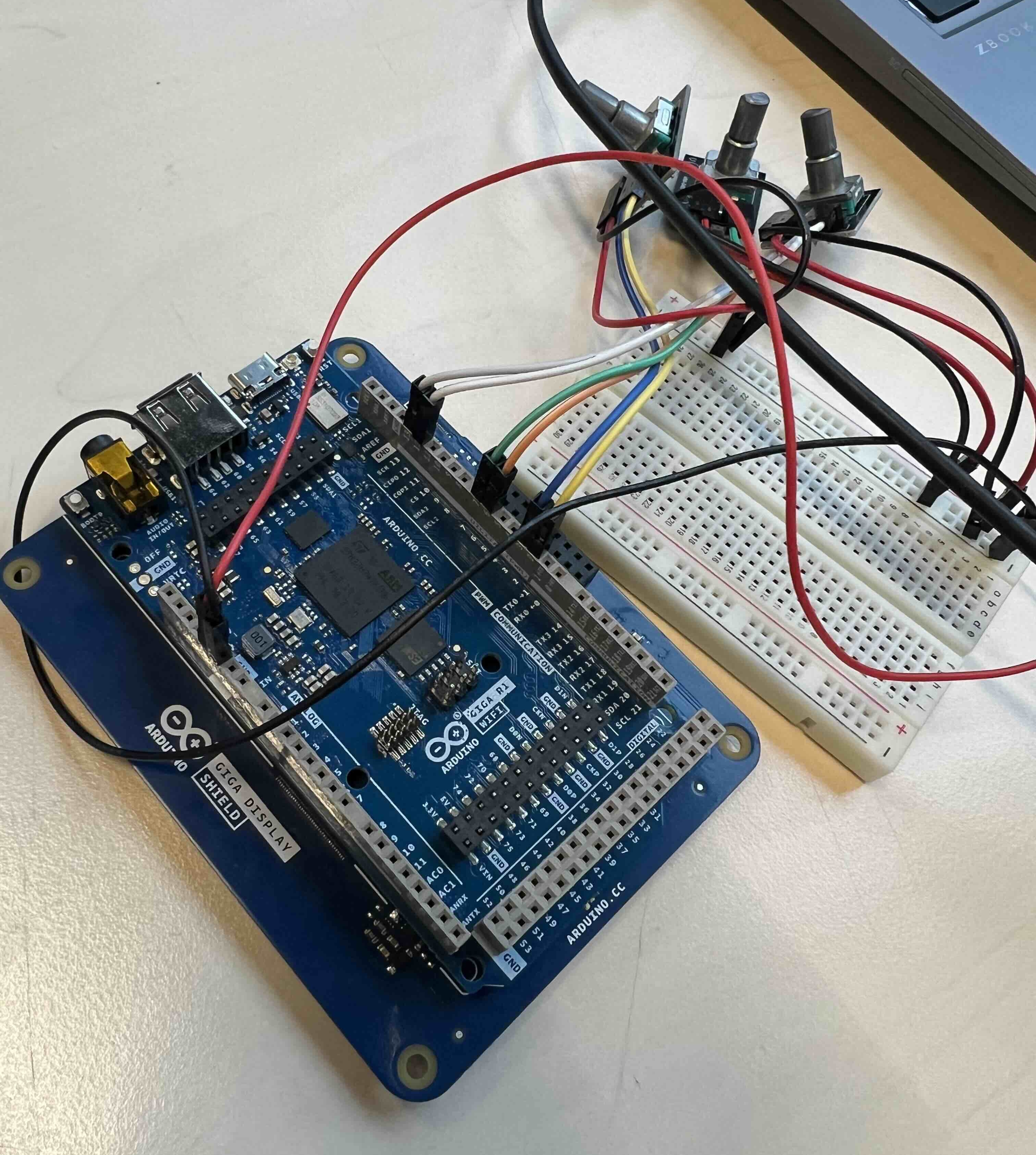
The EduPace device is a handheld training controller built around the Arduino GIGA R1 and its display shield. A touchscreen interface and three incremental rotary encoders let users adjust rate, output, and sensitivity in a way that mirrors the Medtronic 53401 interaction style, while improving clarity with visual dials.

Hardware highlights

Designed for one-handed training workflows with clear feedback for pacing decisions.

800×480 touch display Arduino GIGA R1 core USB-C live sync
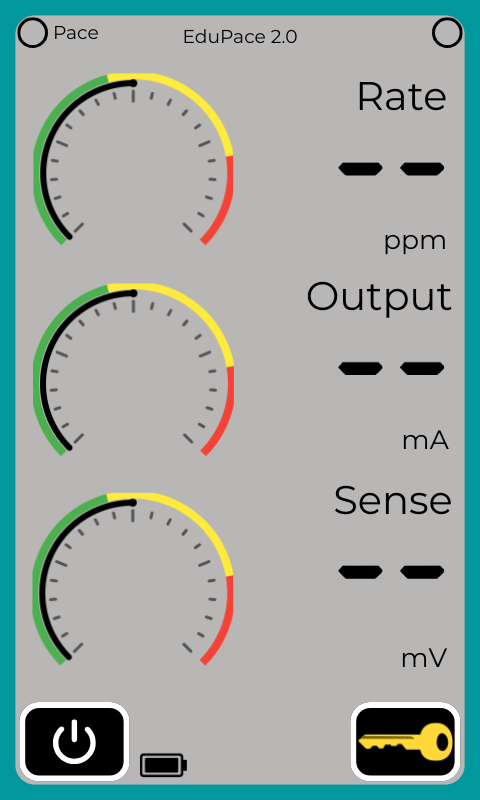
  • Touchscreen UI (LVGL): 800×480 display with clear labels, units, and live device state feedback.
  • Tactile rotary controls: click-by-click encoders adjust RATE, OUTPUT, and SENSE in a Medtronic 53401 style workflow.
  • Power and lock behaviour: on and off plus lock and unlock to prevent accidental parameter changes during training.
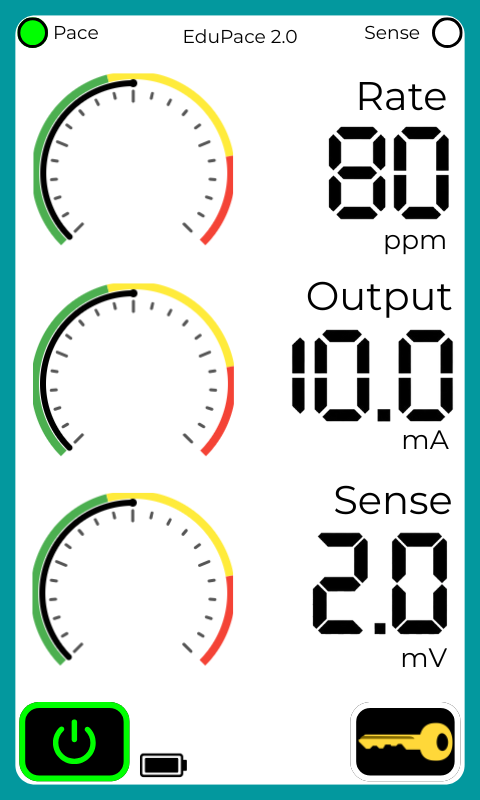
  • Pace and sense indicators: on-screen indicators show pacing and sensing activity for immediate feedback.
  • USB-C serial link: plug-and-play connection to the desktop app for real-time synchronisation.
EduPace hardware device controller
Arduino Giga with Display Shield and Rotary Encoders.
EduPace system overview showing device, application, and pacing workflow
System overview of the EduPace device and EduPace app.

Device UI states

The device interface changes by state to match the reference workflow: splash screen, powered off, powered on, locked, and pacing or sensing activity indicators.

Casing design

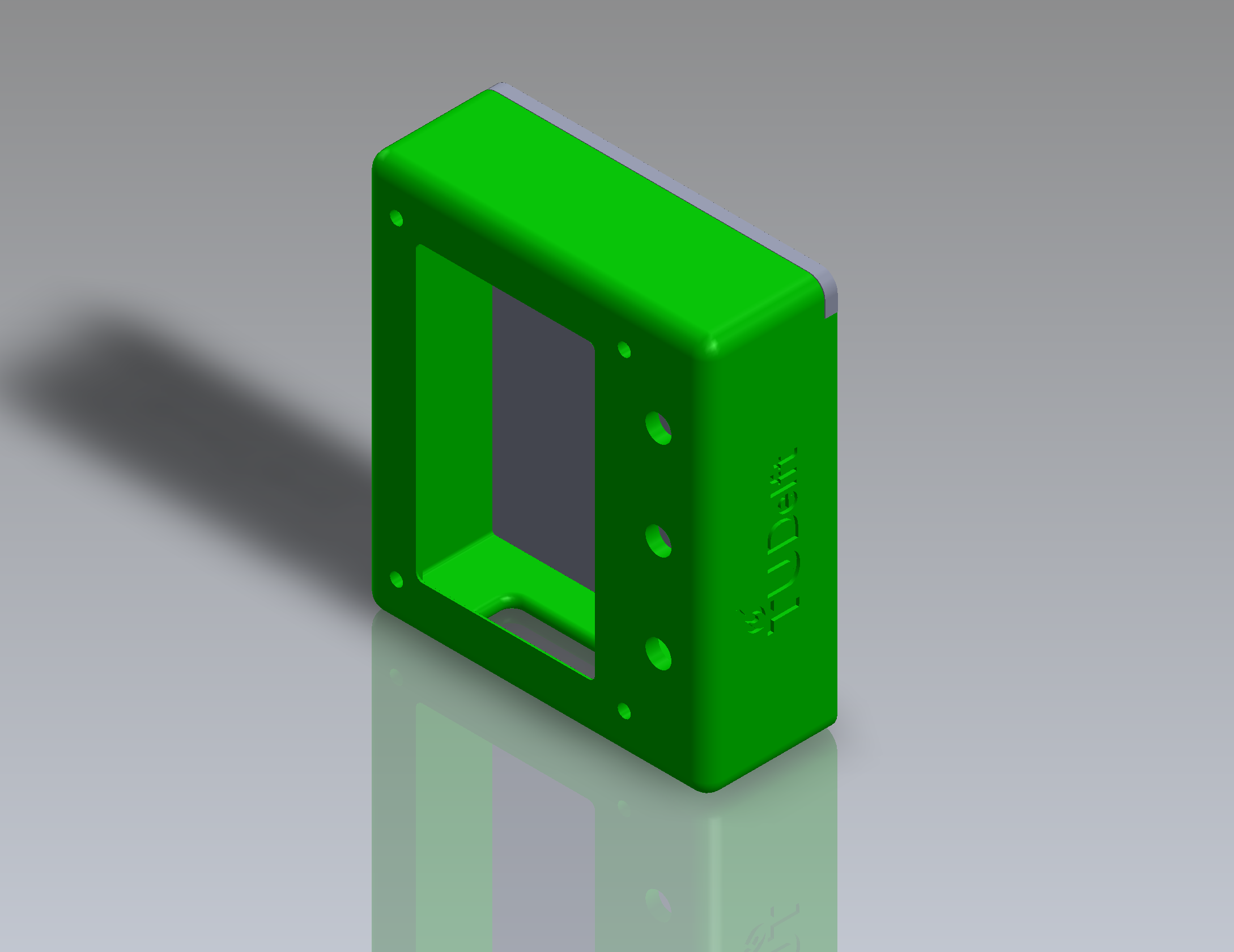
Enclosure CAD

CAD iterations focused on recreating the look, feel, and handling of a clinical temporary pacemaker. Enclosure geometry, knob placement, and internal mounting were refined through multiple prototypes to ensure intuitive one-handed operation and close similarity to the Medtronic 53401 used in hospitals. Design decisions were validated through iterative prints and hands-on testing prior to final assembly.

  • Lightweight 3D-printed enclosure optimized for handheld, clinical-style use.
  • Custom rotary knobs dimensioned and aligned with encoder shafts using CAD fixtures for consistent tactile feedback.
  • Internal mounting rails secure the display, indicator LEDs, and wiring while keeping the enclosure thin and serviceable.
  • Multiple print iterations were used to validate knob spacing, ergonomics, and usability before final assembly.
Final product

Training-ready simulator

The final EduPace system blends hardware and software into a single workflow for instructors and learners. Scenarios are selected on the dashboard, adjustments are made on the physical console, and the resulting ECG is reviewed in real time.

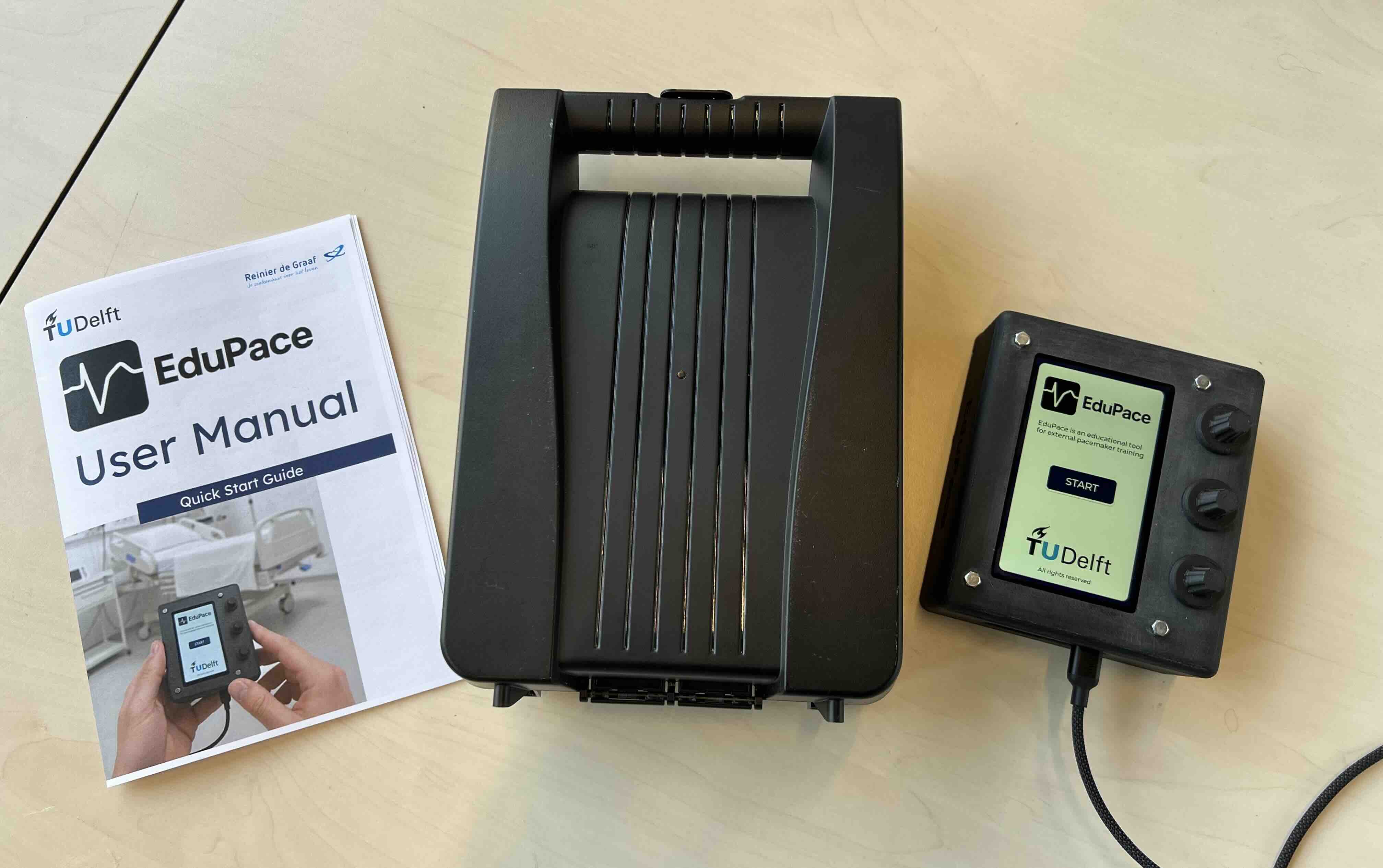
EduPace final package with device and accessories
Final EduPace package prepared for training delivery.
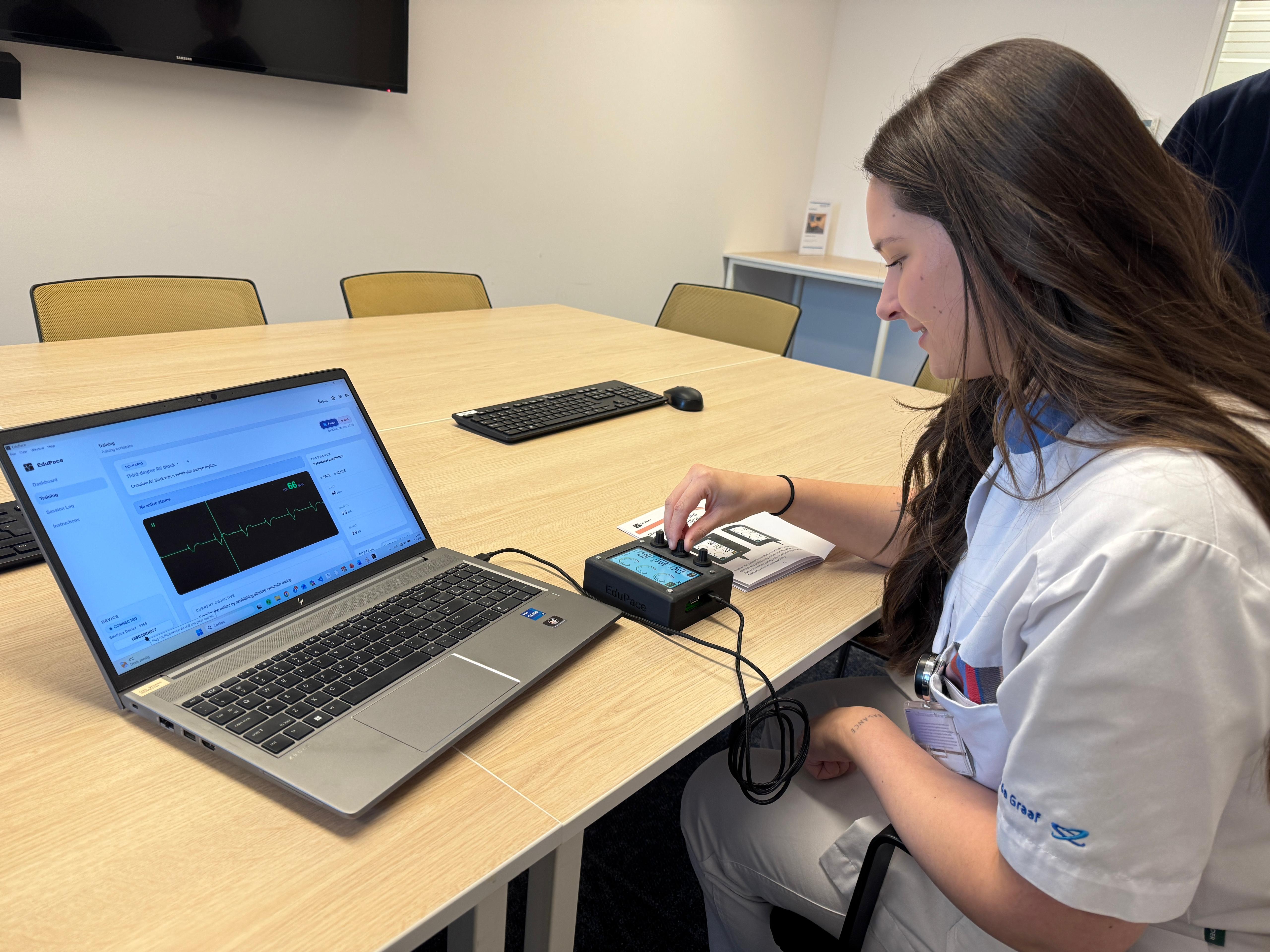
EduPace device being used in a training session
Live training session validating the final form factor.

Key results

Improved realism

Refined ECG modelling and pacemaker decision logic produce pacing behaviour that more closely reflects clinical expectations. ECG traces were reconstructed from real waveforms using rational Bézier–Bernstein modelling, resulting in more realistic ventricular pacing scenarios. While overall realism and usability improved, feedback indicated that certain edge-case ECG behaviours require further refinement in future iterations.

Higher usability

Feedback from nursing staff indicated that the updated hardware layout and touchscreen interface felt closer to the Medtronic 53401 and easier to operate than the previous prototype. Physical rotary controls, clear visual feedback, and lock functionality supported intuitive hands-on training.

Future-ready platform

EduPace was designed with a modular hardware–software architecture that supports future expansion. Planned extensions include additional pacing modes, more physiologically detailed ECG behaviour, and a broader set of clinical training scenarios.

Team & contributions

Ashley Jacobi

ECG morphology, pacing logic design, documentation lead.

Süheyla Nurlu

Arduino integration, hardware interaction, serial communication.

Cees Vlasman

Enclosure CAD, 3D printing, hardware assembly and testing.

Adrien Joon-Ha Im

EduPace app development, UI/UX flow, WebSerial integration.

Acknowledgements

The EduPace team thanks project supervisor Paul Verschuren and nurse Kim for providing clinical feedback, guidance, and support throughout development.

Disclaimer

EduPace is for educational use only and is not a medical device.